

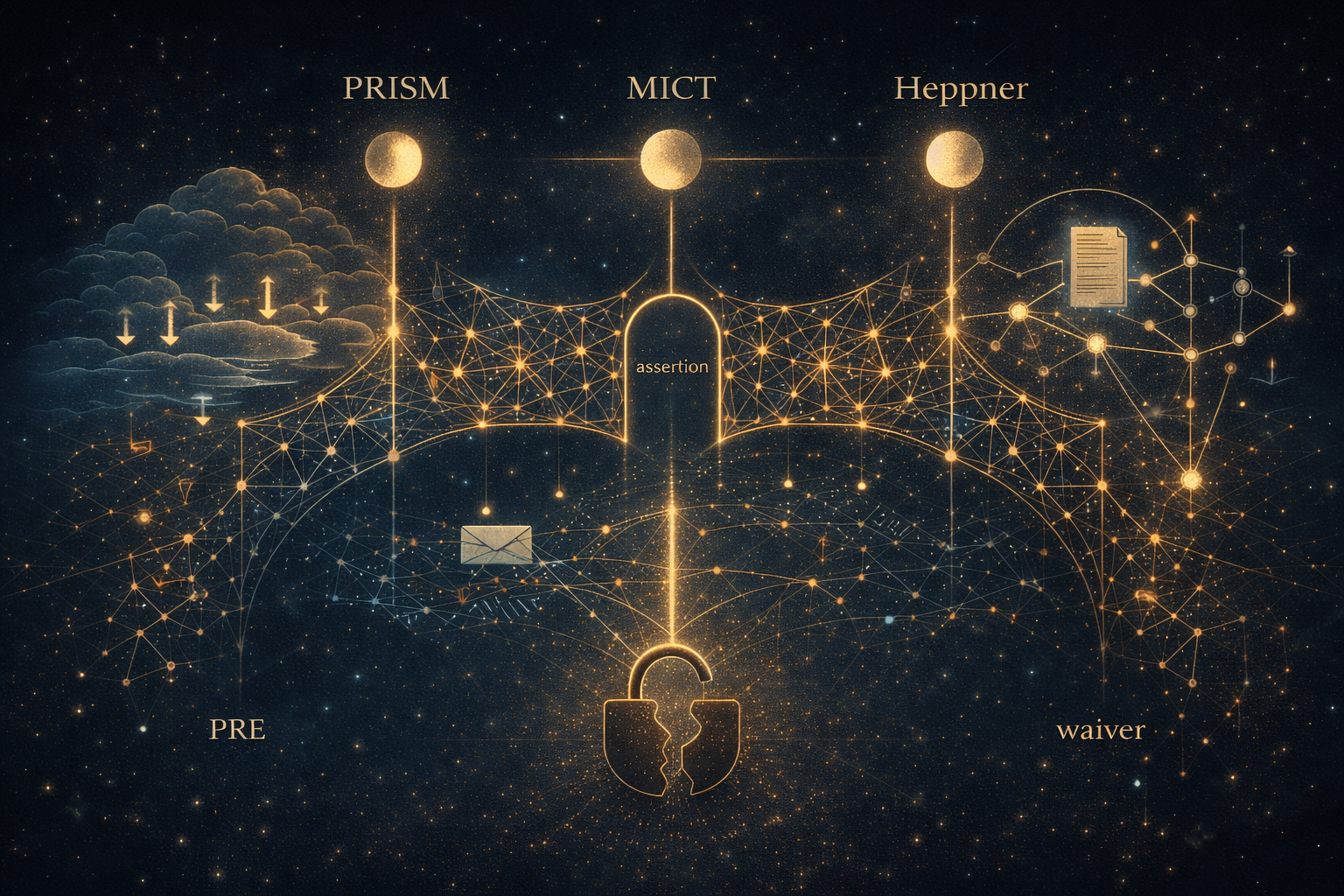
How PRISM, MICT, and United States v. Heppner Completed the Structural Destruction of Attorney-Client Privilege | Horizon Accord
Attorney-client privilege is one of the oldest protections in common law. It is also, across every standard communication channel available in 2026, functionally gone — not by any single law or ruling, but by the convergence of three independent systems: PRISM, which collects digital communications before any assertion of privilege is possible; MICT, which maps the relational architecture of physical correspondence without opening a single letter; and United States v. Heppner, which established that a client using a consumer AI tool to understand their own legal situation retroactively strips their attorney's advice of its protection. The right to counsel survives as text. The infrastructure that would make it meaningful does not.